The selection of Leonardo and its AW149 for the UK’s New Medium Helicopter (NMH) programme is not just an industrial win, It’s likely to reshape the defence aerospace recruitment market over the next decade.
With production and long-term support expected to be centred in the UK, the programme will create significant demand for rotary-wing engineering, advanced manufacturing, and sustainment skills across the helicopter supply chain.
Skills Likely to Tighten First
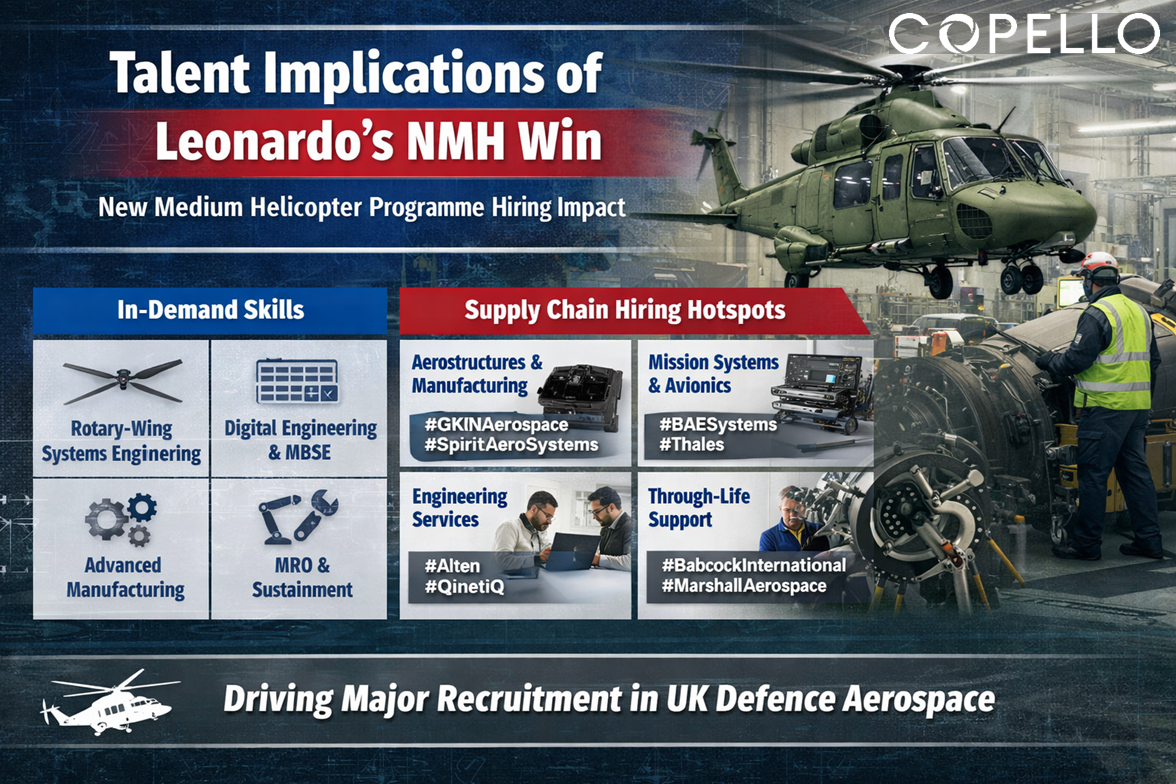
- Rotary-Wing Systems Engineers – Engineers with helicopter experience are a small talent pool in the UK. Skills in flight controls, mission system integration, and airworthiness certification will be particularly scarce.
- Digital Engineering and MBSE Specialists – As modern defence programmes move toward digital design environments, demand will grow for engineers who combine aerospace expertise with model-based systems engineering and simulation.
- Advanced Manufacturing Technicians – Scaling production will require specialists in composites, precision machining, and digital manufacturing, roles already heavily competed for by civil aerospace.
- MRO and Sustainment Specialists – Longer term, the biggest workforce demand will likely be in maintenance, repair and overhaul (MRO), logistics engineering, and predictive maintenance analytics.
Supply Chain Hiring Activity to Watch
NMH will likely trigger recruitment activity across several tiers of the UK defence aerospace supply chain.
• Aerostructures and Manufacturing – Companies such as GKN Aerospace and Spirit AeroSystems could see increased demand for manufacturing engineers, composites specialists, and production leaders.
• Mission Systems and Avionics – Defence electronics firms including BAE Systems and Thales Group may recruit more systems integration and avionics engineers as mission systems packages are developed.
• Engineering Services and Programme Support – Engineering consultancies like Alten and technology organisations such as QinetiQ are likely to play a key role in supplying embedded engineering talent to help scale programmes quickly.
• Through-Life Support – For sustainment and fleet support, organisations like Babcock International and Marshall Aerospace could see rising demand for MRO engineers, technicians, and defence logistics specialists.
What It Means for the Talent Market
For recruiters and hiring managers, the NMH programme signals a tightening labour market in UK rotary-wing and defence aerospace talent.
Companies that succeed will likely be those that:
• build apprenticeship and early-career pipelines,
• attract talent from adjacent sectors such as civil aerospace and space, and
• partner with engineering services firms to scale quickly.
• In short, the NMH programme may become one of the most important drivers of defence aerospace hiring in the UK this decade.
#Leonardo #GKNAerospace #SpiritAeroSystems #BAESystems #Thales #Alten #QuinetiQ #BabcockInternational #MarshallAerospace #NewMediumHelicopter #NMHProgramme #DefenceAerospace #RotaryWing #AerospaceEngineering #DefenceIndustry #EngineeringJobs #UKDefence #STEMCareers